Quick answer
Which hijama points help with kidney disease?
Our Kidney Disease plan is a 4-session hijama programme using wet and dry cupping points on the back and front of the body, allowing 2-4 weeks between sessions. Each session uses different points, shown on zoomable maps for members. The overview, symptoms, diet and lifestyle advice below are free to read.
See where the points are: Back of the body · Front of the body
General information, not medical advice. See the medical disclaimer.
- Complete Hijama Treatment Plan for Kidney Disease
- Which body part or function is involved in Kidney Disease?
- What are the symptoms and effects of Kidney Disease on the body?
- What changes in diet can help improve symptoms of Kidney Disease?
- Changes in lifestyle which can help Kidney Disease
- Possible alternative remedies for Kidney Disease
Complete Hijama Treatment Plan for Kidney Disease
Allow 2-4 weeks between sessions – longer if required. Hijama Points shown for each session should ONLY be used to guide the therapist. Body size, cup size, and any other conditions need to considered and appropriate care and attention taken. The number of sessions shown can be increased or reduced depending on the condition of the client.
Complete Treatment Plan
Click here for Session 1Click here for Session 2

Click here for Session 3
Click here for Session 4
Use the standard hijama points as an additional or as separate standalone sessions.
Standard Wet Points – 1,55,9,10,41,42
Standard Dry Points – 137,140
Click here for Hijama Points on the back of the body
If the client has a complicated history and numerous concerns then it is a good idea to use our online consultation service – book a one-to-one consultation.
Which body part or function is involved in Kidney Disease?
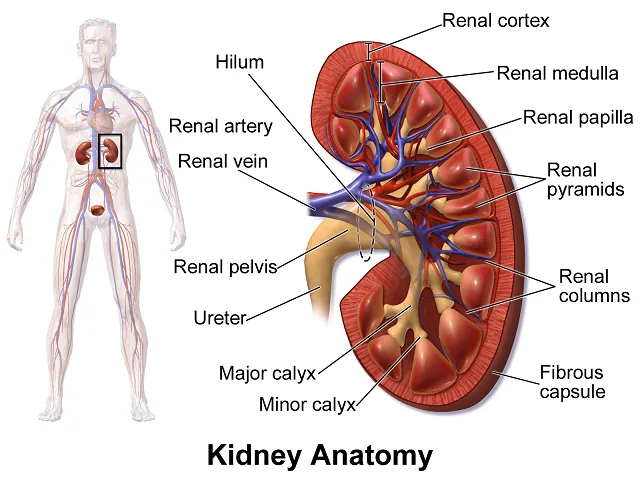
Kidneys are the bean-shaped reddish-brown organs is found in vertebrates. The pair of kidneys found in the human body are located at the right and left of the retroperitoneal spaces. In adults, it is about 12 cm in length and found associated with two body systems including the urinary and endocrine systems.
The kidneys functions to filter the water and other liquids and remove extra fluids and wastes from your body. Also, kidneys and the filtration they do is essential for maintaining minerals, salts, phosphorus, calcium, sodium, potassium, and water balance in the body. They also keep the level of the electrolyte suitable during filtration of the blood. While after filtration of the essential substances the remaining waste is turned into urine and collected in the bladder a funnel-shaped structure connected with the kidneys at the pelvis through a tube called the ureter.
How kidney filters? Each kidney has around one million tiny nephrons, while each nephron has a glomerulus and tubule. The glomerulus has the job of filtering the blood while the tubule returns the vital substances to your blood and transports the wastes substances to the small intestine.
The kidneys have a concave and convex border. The concave border includes the renal hilum, where arteries enter the kidney and renal vein and ureter leaves. The renal capsule’s tough fibrous tissue surrounds the kidney, which is surrounded by renal fascia, perirenal fat, and pararenal fat. The posterior tissues of these fibers surrounding the renal capsule are transversal fascia, while the interior is the peritoneum. Histological studies have shown a slight difference in weight, length, and size between the right and left kidney. The right kidney is slightly bigger than the left one but rarely someone is born with the bigger left kidney while but in females, the kidneys are always smaller in size than males.
What are the symptoms and effects of Kidney Disease on the body?
Proper functioning of kidneys is vital for the overall health of a person and any small impairment can cause a major crisis in the body.
Chronic kidney disease
This is the most common of all kidney-related problems that are caused due to high blood pressure and is a long-term health issue. Hypertension is damaging for kidneys leading to higher pressure on the glomeruli part of the kidney that consists of tiny blood vessels. Having high blood pressure for a longer duration can cause these blood vessels to rupture or get damaged and ultimately decreases kidney function. If the damage has reached a level where it no longer filters the excessive fluid and wastes out of blood sending a person on dialysis.
Polycystic kidney disease
A genetic condition that causes many cysts to form in the kidneys deteriorating the kidney’s normal function or even kidney failure.

Kidney Stone
Kidney stones are hard crystalline minerals that form within the kidney. They are caused due to dehydration while sometimes called renal calculi. If a person experiences hematuria, fever, and pain in the abdominal cavity, it is recommended to get tested for kidney stones.
Kidney Failure– Kidney failure is also caused due to severe dehydration. In this disease, the kidneys lose their ability to efficiently filter your blood and excrete out the waste from it. Many factors such as exposure to acidic or toxic environmental pollutants can interfere with normal kidney function leading to kidney failure. The symptoms of kidney diseases are unnoticed until they become severe. You can only notice the symptom of kidney disease when they already have reached their maximum severity. If you experience the below-mentioned symptoms, you might be developing kidney diseases:
- Fatigue
- Poor appetite
- Skin Problems
- Muscle Spasm
- Sleep Apnea
- Frequent Urination
- Swelling of feet and ankles
- Puffy eyes.
These symptoms are less severe, or treatable but some of the symptoms that can directly lead to kidney failure include:
- Nausea: It is the feel or sensation of wanting to vomit.
- Vomiting: Vomiting is caused by general stomach pain or diarrhea, but if you have consistent vomiting with blood, you may have some severe kidney diseases.
- Anemia: The condition in which a person lacks healthy red blood cells due to which sufficient oxygen is not carried; that’s why kidneys cannot perform well in this condition and lead to failure.
- Pericardium Inflammation: Pericardium is the fluid-filled sacs that cover and protects the heart, while the inflammation in these sacs is a symptom of severe kidney disease. Because when kidneys are damaged, unable to perform functions of filtration and transport, which cause inflammation in these sacs.
- Excess urination: Kidneys filter and absorb the minerals from blood and water to excrete out the waste product, but if kidneys produce an excess amount of urine, there is a problem with the filtration processes of the nephron.
What changes in diet can help improve symptoms of Kidney Disease?
Kidney diseases are generally not life-threatening, but they can be dangerous if they reach a severity level and remain unnoticed and untreated. Maintaining a diet plan according to the severity of the kidney disease is recommended to avoid further damage. Kidney diseases may be occurring due to several reasons, so the diet plan is different for different kidney patients. Generally, kidney patients are asked to avoid food like excessive use of processed meat and canned vegetable with an excess of salt. Fresh fruits and vegetables are advised to be taken to improve kidney health and function and juices, drinks, and other liquids are also good.
Changes in lifestyle which can help Kidney Disease
Make a slight change in your lifestyle or daily routine if you experience any symptoms of kidney disease. Daily exercises like walk and yoga are recommended to kidney patients. While the physical activities that help to lose weight are also beneficial. High blood pressure or hypertension directly affects the kidney, so if you have kidney disease, you must avoid the things increasing your blood pressure, also reducing your stress level is helpful.
Possible alternative remedies for Kidney Disease
The natural remedies for kidney diseases involve excess water consumption and avoidance of smoking and toxic liquids like alcohol. Add juices, fruits, and green vegetables to your routine diet to support immunity. Besides, probiotics and parsley juice are highly recommended to kidney stone patients by healthcare professionals.
Related Posts:



Sources and further reading
Independent health organisations and research for background. They describe the condition or cupping in general and do not endorse this treatment plan.
About kidney disease
- Chronic kidney disease – NHS
Research on cupping therapy
- Cao H, Li X, Liu J. An updated review of the efficacy of cupping therapy – PLOS ONE, 2012
- Al-Bedah AMN et al. The medical perspective of cupping therapy: effects and mechanisms of action – Journal of Traditional and Complementary Medicine, 2019
- Cupping – US National Center for Complementary and Integrative Health
Hijama for kidney disease: your questions
Which hijama points are used for kidney disease?
Our Kidney Disease plan is a 4-session hijama programme using wet and dry cupping points on the back and front of the body, allowing 2-4 weeks between sessions. Each session uses different points, shown on zoomable maps for members. The overview, symptoms, diet and lifestyle advice below are free to read. See where the points are on our back of the body and front of the body maps.
Are hijama points and cupping points the same?
Yes. Cupping points are the places on the body where cups are placed, and in hijama (wet cupping) they are called hijama points: the same numbered points are used for dry cupping and hijama. Our kidney disease plan uses wet and dry cupping. Every point is on our hijama and cupping points chart.
How many hijama sessions are needed for kidney disease?
Our kidney disease plan has 4 sessions, each using different points, with 2-4 weeks between sessions. How many sessions someone needs varies from person to person, and your therapist may adjust the plan. Hijama should support, never replace, care from your doctor.
Can I do hijama for kidney disease myself?
Wet cupping should only be done by a trained therapist, with sterile, single-use equipment. Many people unlock the plan for a one-off £9.95 and take it to a Certified Hijama Therapist, who carries out the sessions.
Who should check with a doctor before hijama?
Talk to your doctor first if you have a bleeding or clotting disorder, take blood-thinning medicines, have anaemia, are pregnant, have diabetes or have a heart condition or a pacemaker. Tell your therapist about any medical conditions and medicines before treatment.