Quick answer
Which hijama points help with infertility?
Our Infertility plan is a 3-session hijama programme using wet cupping (hijama) points on the back and front of the body, allowing 2-4 weeks between sessions. Each session uses different points, shown on zoomable maps for members. The overview, symptoms, diet and lifestyle advice below are free to read.
See where the points are: Back of the body · Front of the body
General information, not medical advice. See the medical disclaimer.
Complete Hijama Treatment Plan for Infertility
Allow 2-4 weeks between sessions – longer if required. Hijama Points shown for each session should ONLY be used to guide the therapist. Body size, cup size, and any other conditions need to considered and appropriate care and attention taken. The number of sessions shown can be increased or reduced depending on the condition of the client.
Complete Treatment Plan
Click here for Session 1Click here for Session 2

Click here for Session 3
Use the standard hijama points as an additional or as separate standalone sessions.
Standard Wet Points – 1,55,6,11,12,13,120,49,125,126,143,41,42
Click here for Hijama Points on the front of the bodyClick here for Hijama Points on the back of the body
If the client has a complicated history and numerous concerns then it is a good idea to use our online consultation service – book a one-to-one consultation.
Which body part or function is involved in Infertility?
As we all have a knowledge of this common ailment named, infertility, that is not being able to conceive a baby after a year of unprotected and frequent sex. Women who can conceive but do not carry a pregnancy to term may also be deduced with infertility. Primary infertility is referred to those who have never been able to get pregnant, while secondary infertility is referred to those women who have at least one successful pregnancy in past. It isn’t just limited to inability in women. Infertility can also be a cause due to infertility of men. Men can be infertile too. Men and women both have equal chances of fertility issues.
Fertility in women is known to fall constantly with age, many providers analyze and treat women aged 35 years or older after 6 months of frequent unprotected sex. Women with infertility should consider some sittings with a reproductive endocrinologist—a doctor who works in supervising infertility. Reproductive endocrinologists are also specialized in helping women with recurrent pregnancy loss, defined as having two or more spontaneous miscarriages.
Pregnancy is a process based on several steps that have to be taken place. To conceive:
- A female body must release a healthy egg from one of her ovaries.
- A male sperm must fuse with the egg along the way (fertilize).
- The fertilized egg must run through the fallopian tube toward the uterus (womb).
- The fertilized egg must bind to the wall of the uterus (implantation).
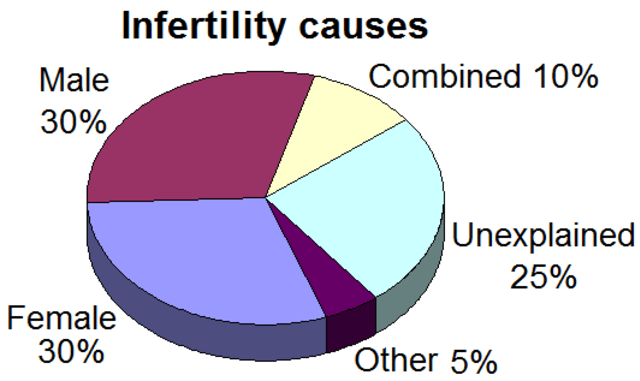
Infertility may result from a disturbance or abnormality in any of the above-mentioned steps. A lot of couples struggle with infertility and search for ways to conceive, but it is mostly considered as only a woman’s condition. Though, in about 35% of couples with infertility, a male factor is involved along with a female factor. While in about 8% of couples with infertility, a male infertility factor is the only diagnosed cause of not being able to conceive.
What are the symptoms and effects of Infertility on the body?
For pregnancy to occur, every step of the human reproduction process has to occur properly. Major causes of infertility are:
Ovulation disorders
Associated with ovulation process in female, if she ovulates infrequently or not, a most common cause of infertility in about 1 in 4 infertile couples. Abnormality with the secretion and regulation of reproductive hormones by the hypothalamus or the pituitary gland, or abnormality in the ovary, can cause ovulation disorders.
Polycystic ovary syndrome (PCOS). PCOS is a condition that causes hormone imbalance, which affects the ovulation process. PCOS is correlated with insulin resistance and obesity, abnormal hair development on the face or body, and acne. It’s one of the major causes of female infertility.
Hypothalamic dysfunction. Ovulation is based on the regulation of two hormones produced by the pituitary gland, they stimulate ovaries to regulate ovulation each month. follicle-stimulating hormone (FSH) and luteinizing hormone (LH). Increased physical or emotional stress, unappropriated body weight, or a current extensive weight gain or loss can disturb the secretion of these hormones and affect ovulation. Abnormal or missing periods are the most common signs.
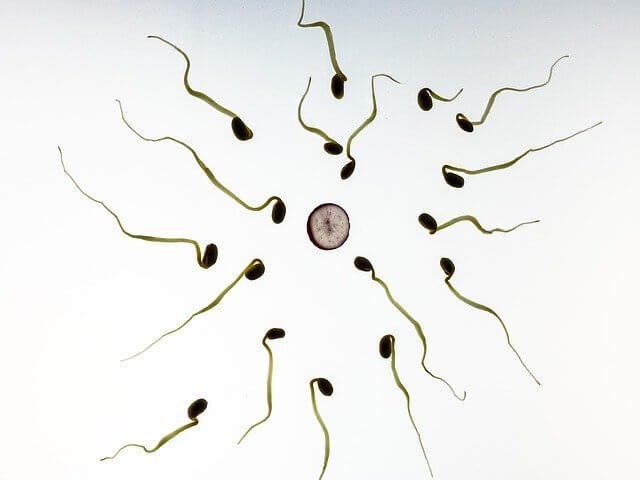
Causes in Men:
If the male partner is suffering from underlying problems or disorder then you should talk to your consultant about this:
- Problem with the delivery of sperm
- Abnormal sperm production and function
- Undergone cancer treatment
Symptoms: It is not rare for people to undergo signs of infertility. This may be troublesome, as many people reveal no direct symptoms of infertility until they try to conceive. The symptom that is most common to infertility is the inability to get pregnant. An irregular menstrual cycle that’s prolonged, too short, or absent can mean that you’re not ovulating.
Other symptoms include:
- Pain during sex
- Dark or pale central blood
- Endometriosis
- Hormone changes
In men:
- Erectile dysfunction
- Ejaculation problem
- Changes in testicles
- Obesity
- Abnormal sperm production
What changes in diet can help improve symptoms of Infertility?
There is no particular food or fertility diet that will immediately increase your chances of conception, a healthy and well-balanced diet can surely help boost overall health, including reproductive health, in both males and females.
- Sunflower seeds
- Citrus fruits
- Mature cheese
- Full-fat dairy
- Having liver meat
- Cooked tomato
- Oyster
- Asparagus
- Walnuts
Changes in lifestyle which can help Infertility
Simple lifestyle changes can help improve your chances of conception. The goal is to maintain a beneficial environment to conceive and get pregnant.
- Quit smoking
- Avoid alcohol
- Considering appropriate timing of intercourse
- Using a lubricant
- Consume protein from meat
- Eating more fiber
- Add walnuts to male’s diet
- Reduce carbs and sugar
- Low caffeine consumption
Possible alternative remedies for Infertility
Luckily, there are some natural ways to increase the chances of fertility. Maintaining your diet and lifestyle changes may support your fertility:
- Use Maca root
- Consumption of winterberry
- Helonias root (for ovulation)
- Alfalfa (balance hormones)
- Dandelion (multivitamin properties, also support liver)
- Grape seed extract
Related Posts:



Sources and further reading
Independent health organisations and research for background. They describe the condition or cupping in general and do not endorse this treatment plan.
About infertility
- Infertility – NHS
Research on cupping therapy
- Cao H, Li X, Liu J. An updated review of the efficacy of cupping therapy – PLOS ONE, 2012
- Al-Bedah AMN et al. The medical perspective of cupping therapy: effects and mechanisms of action – Journal of Traditional and Complementary Medicine, 2019
- Cupping – US National Center for Complementary and Integrative Health
Hijama for infertility: your questions
Which hijama points are used for infertility?
Our Infertility plan is a 3-session hijama programme using wet cupping (hijama) points on the back and front of the body, allowing 2-4 weeks between sessions. Each session uses different points, shown on zoomable maps for members. The overview, symptoms, diet and lifestyle advice below are free to read. See where the points are on our back of the body and front of the body maps.
Are hijama points and cupping points the same?
Yes. Cupping points are the places on the body where cups are placed, and in hijama (wet cupping) they are called hijama points: the same numbered points are used for dry cupping and hijama. Our infertility plan uses wet cupping (hijama). Every point is on our hijama and cupping points chart.
How many hijama sessions are needed for infertility?
Our infertility plan has 3 sessions, each using different points, with 2-4 weeks between sessions. How many sessions someone needs varies from person to person, and your therapist may adjust the plan. Hijama should support, never replace, care from your doctor.
Can I do hijama for infertility myself?
Wet cupping should only be done by a trained therapist, with sterile, single-use equipment. Many people unlock the plan for a one-off £9.95 and take it to a Certified Hijama Therapist, who carries out the sessions.
Who should check with a doctor before hijama?
Talk to your doctor first if you have a bleeding or clotting disorder, take blood-thinning medicines, have anaemia, are pregnant, have diabetes or have a heart condition or a pacemaker. Tell your therapist about any medical conditions and medicines before treatment.