Facial cupping uses small, soft cups and gentle suction on the face. It looks very different from cupping on the back: the cups are smaller, the suction is lighter, and they are usually moved over the skin rather than left in place, so it should not leave the round marks body cupping is known for. This guide explains how it works, what people use it for, what the evidence says, and how to keep it safe.
At a glance
- Facial cupping uses small cups and light suction, usually moved over oiled skin rather than left in place.
- Wet cupping (hijama) with a blade is avoided on the face because it can scar; therapists use dry cupping or a fine pin.
- People use it for facial tension, puffiness and a sense of relaxation. There is very little research on facial cupping itself.
- Avoid broken skin, active acne, rosacea flares, fillers that are still settling and the area right around the eyes.
How is facial cupping different from body cupping?
| Facial cupping | Body cupping | |
|---|---|---|
| Cups | Small silicone or glass cups | Larger glass, plastic or silicone cups |
| Suction | Light | Light to strong |
| Technique | Cups glide over oiled skin or are lifted on and off quickly | Cups often stay in place for a few minutes |
| Marks | Should not leave marks | Round marks for one to two weeks |
| Wet cupping | Avoided with a blade: a fine pin or dry cupping is used | Common on the back and limbs |
Where are the cupping points on the face?
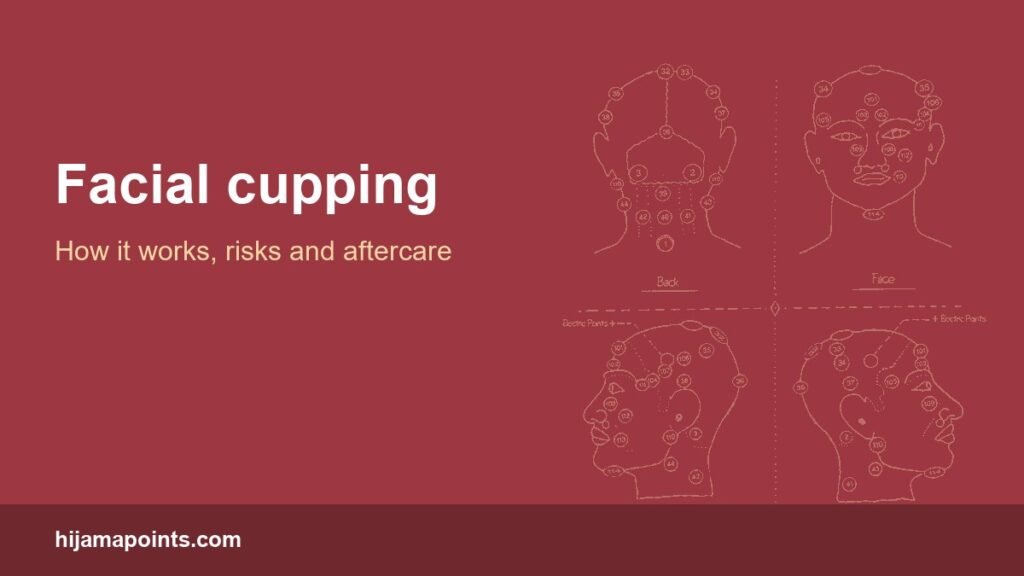
Our face and head map shows the numbered points therapists use, including points above the inner eyebrows and beside the brows, either side of the nose, on the cheeks and near the lips. In facial cupping, small cups are usually glided along the face, often outwards and upwards from the centre, with these points as a guide.
Point 101, on the forehead where it touches the ground in prayer, is better not repeated, and therapists take extra care near the eyes. Read more on our hijama and cupping points chart.
What do people use facial cupping for?
People most often try facial cupping for facial tension, jaw and temple tightness, puffiness, and a relaxing, spa-like treatment. Some therapists use it alongside treatment for sinus congestion or headaches. These uses come from practitioner experience: there is very little research on facial cupping itself, and claims that it removes wrinkles or toxins are not backed by evidence. Most cupping research is on the body, and even there the evidence is limited.
Risks and who should avoid facial cupping
- Do not cup over broken skin, cuts, active acne, cold sores, rosacea flares or areas of skin disease.
- Avoid the delicate skin right around the eyes, and the front of the neck.
- Wait until any fillers, injections or recent facial treatments have fully settled, and ask the person who gave them.
- Too much suction or keeping a cup still can leave marks or broken capillaries that show on the face.
- Talk to your doctor first if you have a bleeding or clotting disorder or take blood-thinning medicines.
What a facial cupping session involves
- The face is cleaned and a light oil or serum is applied so the cups can glide.
- Small cups are squeezed, placed on the skin and moved slowly in short strokes, usually outwards and upwards.
- A session usually takes 10 to 20 minutes.
- Mild redness that fades within a few hours is normal. Marks or bruising are not the aim and suggest the suction was too strong.
Facial cupping aftercare
- Wash off excess oil and avoid heavy make-up for the rest of the day.
- Use sunscreen and avoid strong sun, saunas and very hot showers on the day.
- Drink water, as after any cupping.
- Get advice if you notice marks that do not fade, swelling, blisters or signs of infection. In an emergency, call your local emergency services.
Frequently asked questions
Does facial cupping leave marks?
It should not. Light suction and moving cups usually leave only mild redness for a few hours. Marks suggest the suction was too strong or a cup was left in place.
Can you do hijama (wet cupping) on the face?
Blades are avoided on the face because they can scar. Therapists use dry cupping or a fine pin instead.
How often can you do facial cupping?
Many therapists suggest once a week or less, and never on irritated or broken skin. Stop if your skin reacts.
Can I do facial cupping at home?
Gentle facial cupping with small silicone cups is often done at home. Keep the suction light, keep the cups moving and avoid the eyes. See our guide to cupping at home.
Sources and further reading
- Cupping – US National Center for Complementary and Integrative Health
- Mohamed AA, Zhang X, Jan YK. Evidence-based and adverse-effects analyses of cupping therapy in musculoskeletal and sports rehabilitation – Journal of Back and Musculoskeletal Rehabilitation, 2023