Home cupping kits are easy to buy, and many people wonder whether they can do cupping, or even hijama, themselves. The short answer: gentle dry cupping is sometimes done at home, but wet cupping (hijama) should only be done by a trained therapist. This guide explains why, and sets out the safety rules if you do use cups at home.
At a glance
- Wet cupping (hijama) at home is not safe without training: it involves cutting the skin and needs sterile, single-use equipment.
- Gentle dry cupping with silicone or pump cups is sometimes done at home, ideally after a therapist has shown you how.
- Start with light suction for a few minutes, never on broken skin or varicose veins, and stop if it hurts.
- Avoid fire cupping at home because of the risk of burns.
Can you do hijama at home?
Hijama means making light scratches in the skin and drawing blood. Done without training and sterile equipment, it carries a real risk of infection, scarring and bleeding problems, and of cutting in the wrong place. For that reason we always recommend that hijama is done by a trained therapist. Many people use our treatment plans by taking them to a Certified Hijama Therapist, who carries out the sessions.
Dry cupping at home
Dry cupping, which uses suction only, is lower risk and is sometimes done at home for muscle tension, for example on the thighs, calves or shoulders. Silicone cups (squeezed by hand) and plastic cups with a hand pump are the usual choices. Our guide to hijama cups compares the types and sizes.
It is hard to place cups well on your own back, so most people need someone to help, and a therapist can show you where and how before you start.
Safety rules for cupping at home
- Start gently: light suction and a few minutes at first. Never leave cups on until blisters form.
- Stop if it hurts: suction should feel like a firm pull, not pain.
- Skip fire cupping: the flame can burn the skin or start a fire.
- Keep it clean: wash cups between uses and never share them.
- Check the skin first: no cupping on broken, burnt, infected or very thin skin, areas of skin disease, varicose veins or fresh injuries.
- Be careful with the face and neck: use light suction only, and avoid the front of the neck.
Who should not do cupping at home
Talk to your doctor before any cupping if you have a bleeding or clotting disorder, take blood-thinning medicines, have anaemia, are pregnant, have diabetes, or have a heart condition or a pacemaker. If you have one of these, home cupping is best avoided.
Using the maps at home
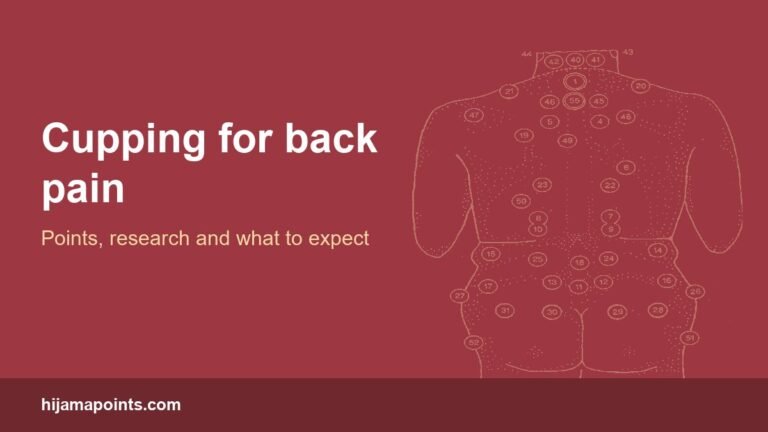
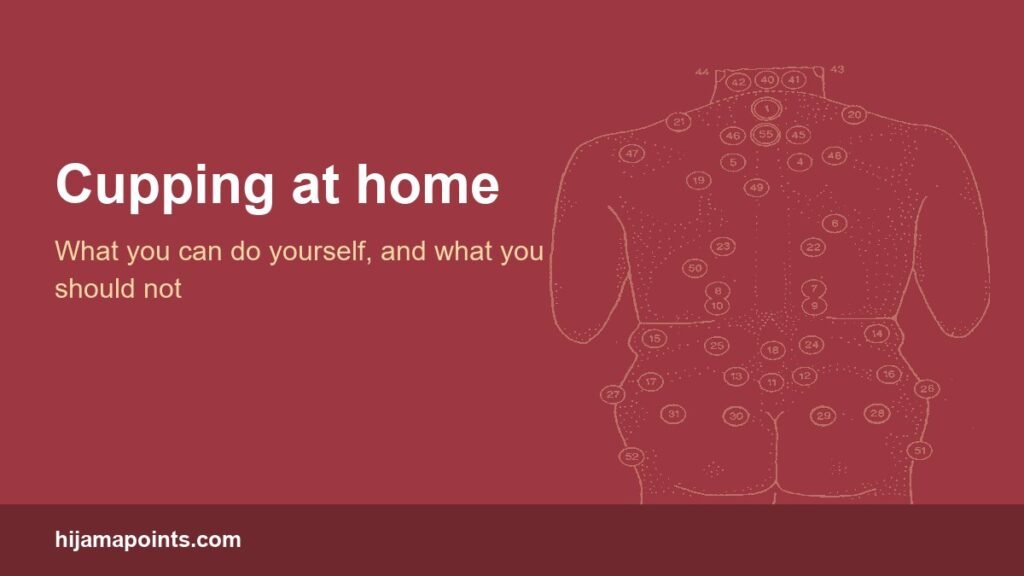
Our free body maps and hijama and cupping points chart show where the numbered points are, and the printable PDFs are handy to share with your therapist. The maps are a guide to where points are, not instructions for doing wet cupping yourself.
When to stop and get help
Stop and get medical advice if you notice blisters or burns, spreading redness, heat, swelling or pus, or a fever. In an emergency, call your local emergency services. See cupping side effects for what is normal after cupping.
Frequently asked questions
Can I do hijama on myself?
We do not recommend it. Hijama involves cutting the skin and needs sterile, single-use equipment and training. Take your plan to a trained therapist instead.
How long should I leave cups on at home?
Start with a few minutes and light suction. Longer is not better: leaving cups on too long can cause blisters.
Are silicone cups safe to use at home?
They are the gentlest option for dry cupping because you control the suction by squeezing. Clean them after each use and do not share them.
Can I cup my own back?
It is difficult to place cups well on your own back. Ask someone to help, ideally after a therapist has shown you how.
Sources and further reading
- Cupping – US National Center for Complementary and Integrative Health
- Mohamed AA, Zhang X, Jan YK. Evidence-based and adverse-effects analyses of cupping therapy in musculoskeletal and sports rehabilitation – Journal of Back and Musculoskeletal Rehabilitation, 2023