Cupping, massage and gua sha are all hands-on treatments for tight, sore muscles, and many therapists offer more than one. They work in different ways, though: massage presses into the tissue, cupping lifts it with suction, and gua sha scrapes along the skin with a smooth tool. This guide compares them so you can choose, or combine them.
At a glance
- Massage uses pressure; cupping uses suction to lift the skin and muscle; gua sha uses firm strokes with a smooth tool.
- Cupping and gua sha often leave marks for days; massage usually leaves none.
- Moving (massage) cupping combines suction with massage strokes over oiled skin.
- Research on all three is limited; they are best seen as complementary therapies alongside usual care.
The key differences
| Cupping | Massage | Gua sha | |
|---|---|---|---|
| How it works | Suction lifts skin and muscle into a cup | Hands press, knead and stretch the muscle | A smooth tool is stroked firmly along oiled skin |
| Feel | A firm pull | Pressure, from gentle to deep | Firm scraping strokes |
| Marks | Round marks for one to two weeks | Usually none | Red or purple streaks that fade over days |
| Wet version | Yes: hijama (wet cupping) | No | No |
| Common uses | Muscle tension, back and neck pain; hijama for its place in the Sunnah | Muscle tension, relaxation, recovery | Muscle tension, neck and shoulder stiffness |
Moving cupping: cupping and massage together
In moving (massage) cupping, the therapist oils the skin, places a cup with light to medium suction and glides it along the muscles. It feels like a deep massage that lifts rather than presses, and many people find it a good introduction to cupping. It is dry cupping, with no blood drawn. Read more in our guide to dry cupping vs wet cupping.
What is gua sha?
Gua sha comes from traditional Chinese medicine. The therapist strokes a smooth-edged tool, often made of stone, horn or metal, firmly along oiled skin, usually on the back, neck and shoulders. The strokes bring up red or purple streaks called “sha”, which fade over a few days. A much gentler facial version with flat stones is popular in skincare; that is different from body gua sha and should not leave marks. See also our guide to facial cupping.
What does the research say?
All three have mostly been studied for pain and muscle tension. For cupping, a 2023 review found moderate evidence for soft-tissue flexibility and low to moderate evidence for back and neck pain, mostly from dry cupping. Massage has been studied more widely; gua sha research is small. There are few good trials comparing them directly, so it is not possible to say one is better.
Which should you choose?
- If marks would be a problem, for example before an event or a holiday, massage is the safest choice.
- If you want a deeper lift for tight muscles, try moving cupping or static dry cupping.
- If you want hijama for its place in the Sunnah, choose wet cupping with a trained therapist. See what is hijama.
- Many therapists combine them in one session, for example massage first and then cups.
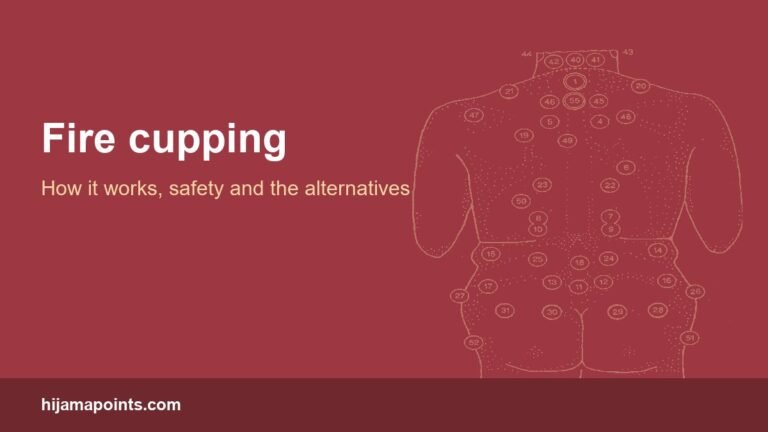
The same precautions apply to all three: avoid broken or infected skin and varicose veins, and talk to your doctor first if you have a bleeding or clotting disorder, take blood-thinning medicines, are pregnant or have a heart condition. See our hijama and cupping points chart for where therapists place cups.
Frequently asked questions
Is cupping better than massage?
Neither has been shown to be better. Cupping lifts tissue with suction and massage presses it; many people like to combine them.
Is gua sha the same as cupping?
No. Gua sha uses a smooth tool stroked along the skin, while cupping uses suction cups. Both can leave marks that fade over days.
Can I have massage after cupping?
Yes, many therapists massage before or after cupping. After wet cupping, avoid pressing on the small scratches until they have healed.
Does gua sha leave marks like cupping?
Body gua sha usually leaves red or purple streaks that fade over a few days. Gentle facial gua sha should not leave marks.
Sources and further reading
- Mohamed AA, Zhang X, Jan YK. Evidence-based and adverse-effects analyses of cupping therapy in musculoskeletal and sports rehabilitation – Journal of Back and Musculoskeletal Rehabilitation, 2023
- Cramer H et al. Cupping for chronic pain: a systematic review and meta-analysis – Journal of Pain, 2020
- Cupping – US National Center for Complementary and Integrative Health